
Running a Sex Offender Check in Donley County
The Texas Department of Public Safety manages the Texas Public Sex Offender Registry under Code of Criminal Procedure Chapter 62. It is the main public search for Clarendon, Howardwick, Hedley, and rural Donley County. There are not three separate city registries. Use the statewide system first, then direct a local question to the agency responsible for registration at that residence.
Adults living inside a city register with city law enforcement. Those living outside a city register with the county authority. For unincorporated Donley County, the local point is the Donley County Sheriff's Office at 300 S. Jefferson, Clarendon, phone (806) 874-3533. No special registration hours, appointment rule, public local form, or fee was found. Call before visiting.
The public search and the local registration duty serve different roles. DPS publishes the statewide profile. The local authority receives required updates and performs duties set by Chapter 62. A public user should not try to conduct a compliance check in person. Send a question about suspected noncompliance to law enforcement.
Donley County Registry Starts Statewide
The DPS registration program explains how local registration and public notification feed one Texas system. Its official program page is pictured below.
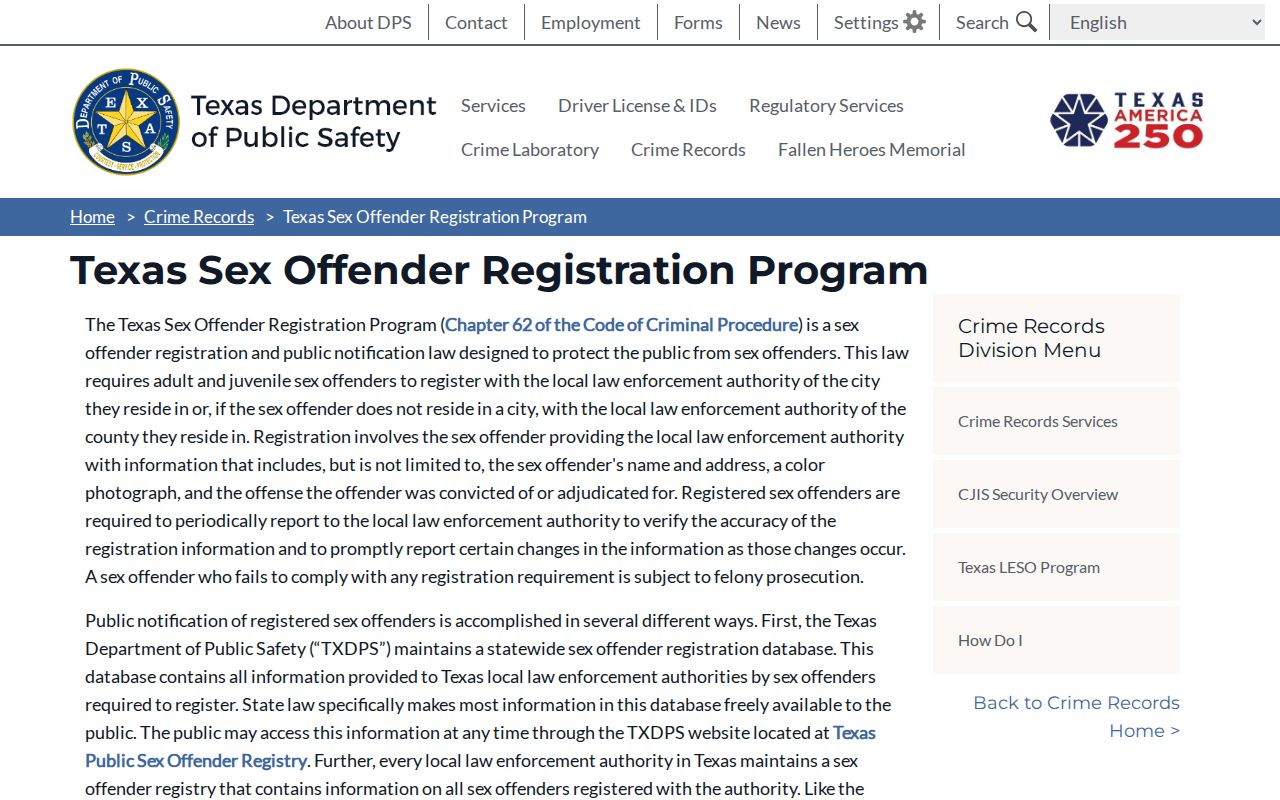
That structure keeps a search from depending on whether a city has a police department page or its own online tool. Clarendon's sheriff service arrangement, Howardwick's marshal language, and Hedley's lack of a verified city police unit do not create separate public databases. DPS remains the common Donley County sex offender search layer.
Searching the Texas Public Sex Offender Registry
The registry supports different paths because a user may know a person, an address, or only an area. The portal timed out during research, so no exact radius values or menu choices are claimed. DPS separately confirms that its mobile app includes name, location, route, and proximity searches. Use only the controls shown by the live official service.
- Open the official DPS registry and review its use terms.
- Choose name, address, county, city, ZIP, or map search based on the facts known.
- Use Donley as the county filter, or check Clarendon, Howardwick, Hedley, and nearby rural addresses as needed.
- Compare aliases, description, photograph, address information, offense, and status before treating a result as a match.
| Search mode or field | Type | Required | Use |
|---|---|---|---|
| Name | Tab or mode | Route-dependent | Registrant-name search |
| Address | Tab or mode | Route-dependent | Street, city, or ZIP search where offered |
| County | Selector | No | Select Donley |
| City | Text or selector | No | Narrow to an incorporated place |
| ZIP Code | Text | No | Search a postal area |
| Map Search | Map | No | Review geographic or proximity results |
| Higher Education | Mode where offered | No | Review campus affiliation |
The official registry interface shown below is the correct place to run the public query.
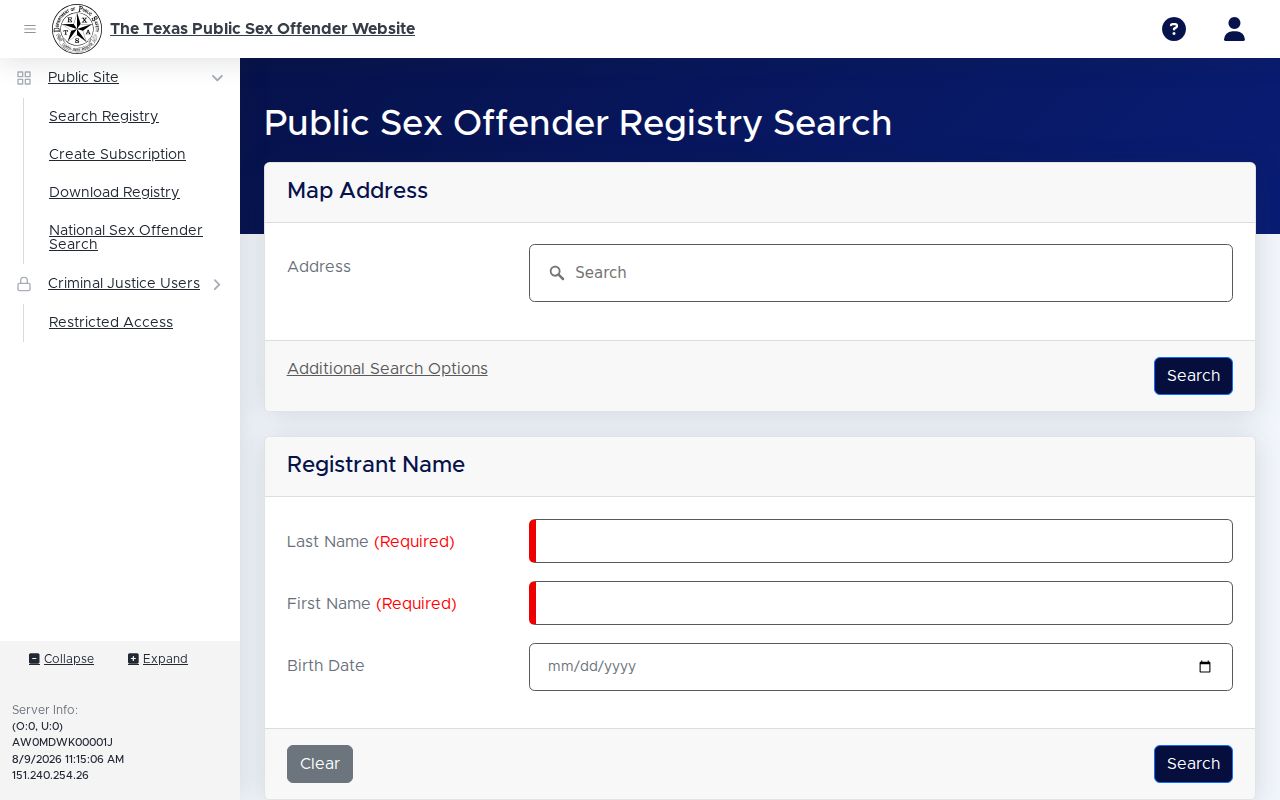
Do not center a search on one unverified result. Run an alias or location variant when the first query fails, and use physical and case details to rule out a same-name mismatch.
Donley County Rural Registry Geography
The official Donley County profile places the county in the southeast Texas Panhandle. Donley County spans 926.91 square miles and had a 2020 population density of 3.5 people per square mile. Those Census facts describe a wide rural search area, not a cause of crime. They do explain why a county-only list and a city-only search can answer different geographic questions. Clarendon, Howardwick, and Hedley are incorporated; Lelia Lake is not.
When an address is near a city limit, run both an address or map search and a Donley County filter. Postal city names do not always settle jurisdiction. If the result remains unclear, contact DPS about the profile and use the Donley County official directory to reach the sheriff about an unincorporated address. Do not assume Howardwick's city marshal code or Hedley's county justice-court office identifies the current registration authority for a specific person.
A route or proximity search can add context for travel through the county, but it depends on the locations and settings available in the live tool. The research did not verify a fixed radius menu. Read what the current portal shows and avoid drawing a boundary from a postal label alone.
What a Registry Profile Shows
A public profile can help distinguish people and understand the legal basis for registration. It does not show every field held by DPS, and it does not prove new misconduct. The profile may include the items below, subject to the actual record and public-release rules.
| Name and Aliases | Public identity names used to find and distinguish the registrant. |
|---|---|
| Photo and Description | Photograph plus sex, race, height, weight, eye, and hair details. |
| Residence | Registered address or a geographic description when that is the public form. |
| Reportable Offense | Offense information, conviction or adjudication date, and punishment details where public. |
| Risk and Status | Texas risk or status information and other public registration indicators. |
| Other Public Details | Higher-education affiliation and specified trafficking-related vehicle data where applicable. |
Nonpublic material includes Social Security and driver-license numbers, phone numbers, online identifiers, employer contact details, extra DPS fields, and victim-identifying data. A court may also order juvenile registration information nonpublic.
Custody Tools Are Not Donley Registries
Registry status, prison custody, and parole notification are different records. The Texas IVSS portal concerns custody, parole, and mandatory-supervision status and confidential notifications.
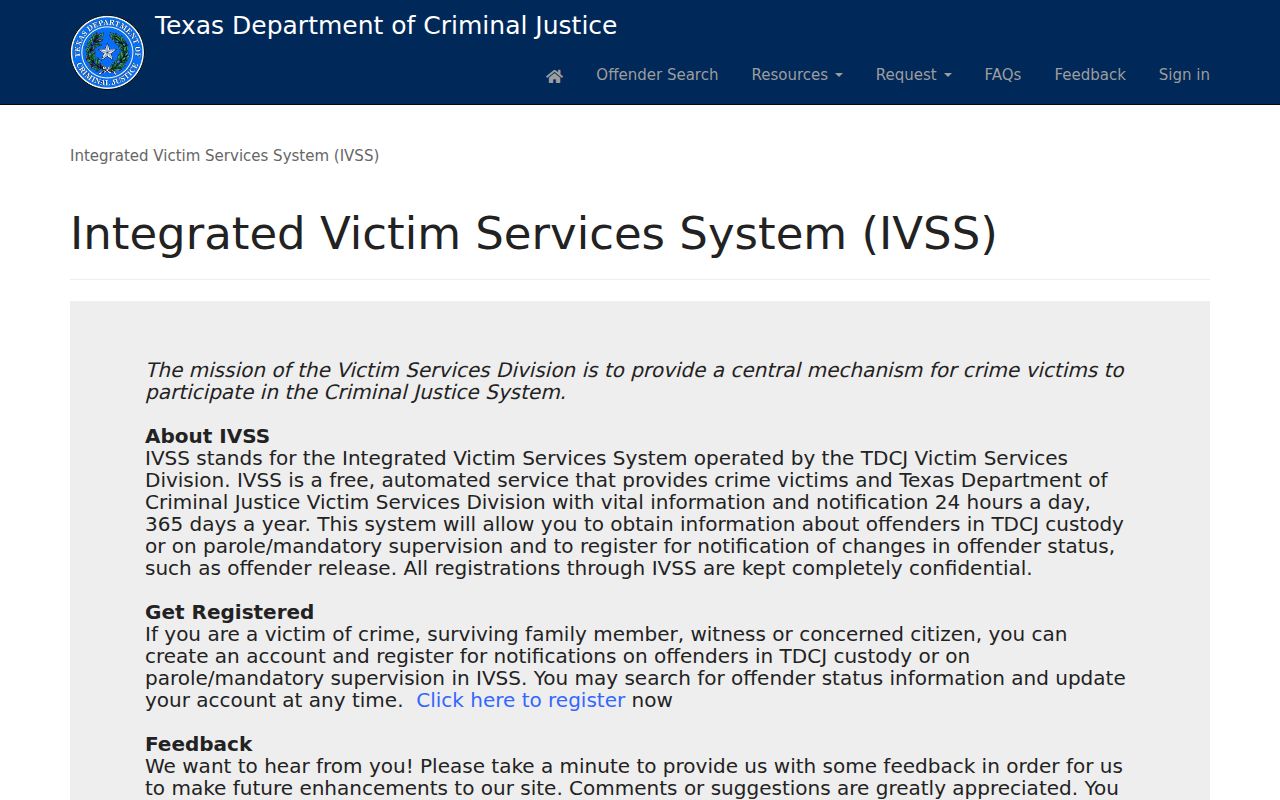
IVSS does not replace a Donley County sex offender check. The official TDCJ county assignment table likewise shows parole administration, including Donley's assignment to the Amarillo office.
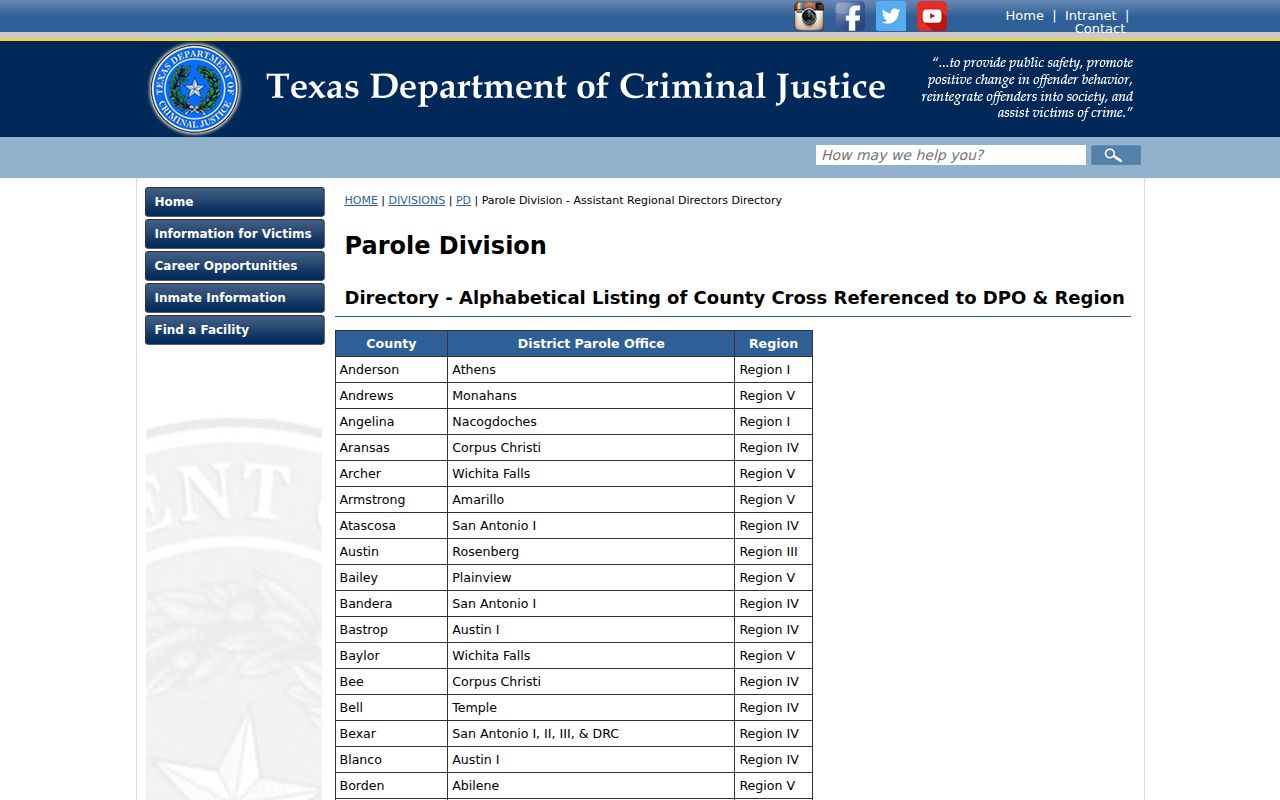
A person can have a registry duty without current prison or parole status. The reverse can also be true. Search the public DPS registry for registration, IVSS or TDCJ for state custody, and the proper court file for the underlying judgment.
Registration Requirements and Levels in Texas
Texas uses low, moderate, and high risk levels for risk and notification. They are not the same as the federal Tier I, II, and III duration labels. Under Article 62.101, registration may last for life or for a term ending ten years after release or discharge, depending on the offense and category. Juvenile and special rules can change the analysis.
| Texas concept | Duration | Verification |
|---|---|---|
| Low, moderate, or high | Does not itself set duration | Risk affects notification, not a federal-style term |
| Lifetime or ten-year duty | Set by offense-based Chapter 62 rules | Annual baseline, with more frequent rules for specified categories |
| Civilly committed sexually violent predator | Special statutory status | Additional Chapter 62 rules apply |
Verification frequency varies. Chapter 62 has an annual baseline and more frequent duties for specified categories. DCSO or DPS must confirm an individual's actual schedule. Failure to comply with a registration duty is a felony.
Federal Registry Searches Beyond Donley County
The National Sex Offender Public Website adds a cross-state registry search when a person or address may connect to more than Texas. It is a national layer, not a substitute for reading the current DPS profile and asking a Donley County authority about local geography.
The Federal Bureau of Prisons Inmate Locator is another distinct tool. Its official interface is shown below.
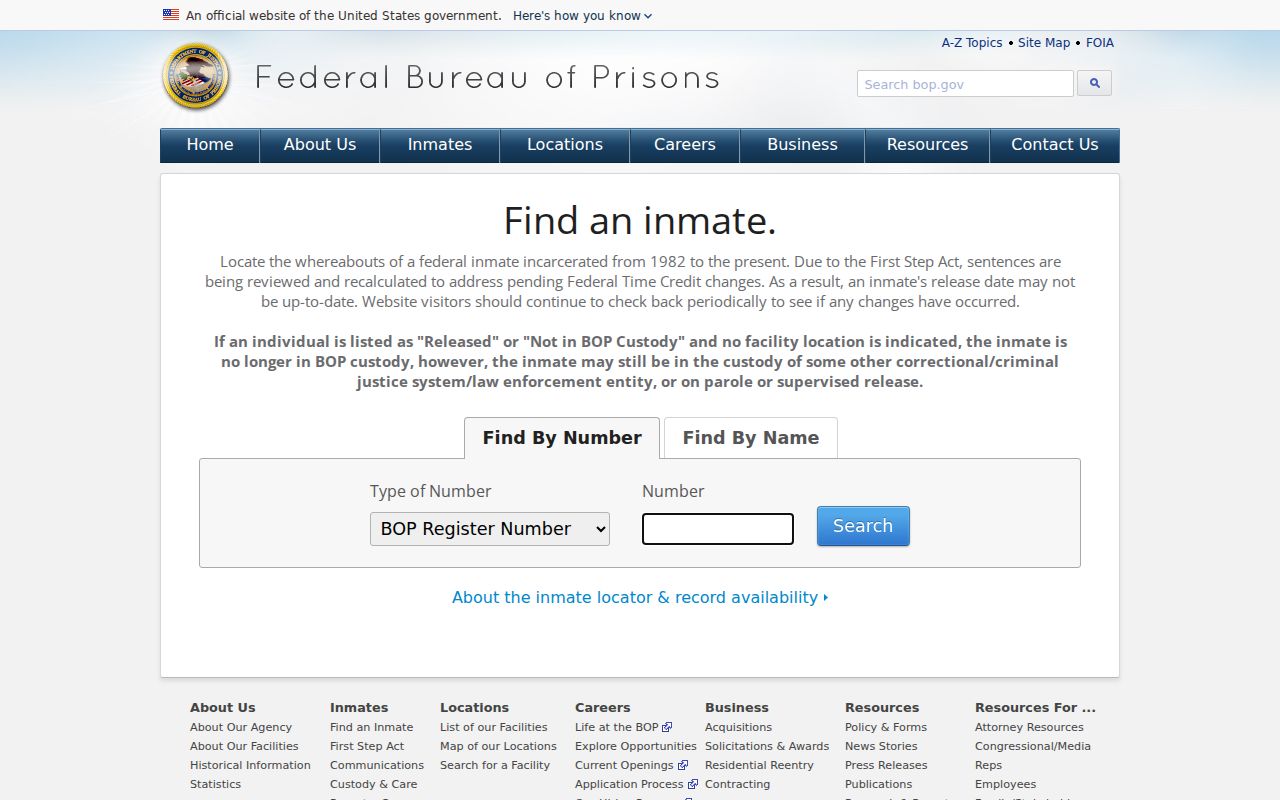
BOP searches federal custody, generally from 1982 forward, by federal identifier or name and personal details. It does not establish Texas registration status. No federal prison was identified in Donley County.
Donley County Registry Notification
Texas notification can use DPS and local databases, authorized publication, school notices, and postcards when a high-risk registrant or civilly committed sexually violent predator moves into a community. The research found no Donley County alert-signup service, community meeting schedule, or local residency-distance ordinance. Do not add those features based on another county's rules.
DPS also confirms that its official mobile app supports name, location, route, and proximity registry searches. That app is useful while traveling through the county, but its results still come from the statewide registry. For suspected noncompliance, report the concern to DCSO at (806) 874-3533 or use the DPS Crime Records contact channel. Call 911 only for an emergency.
High-risk and civil-commitment notices are forms of public notification, not new criminal judgments. Read the linked profile for its actual offense and status. A postcard or school notice should not be stretched into claims about a person's present acts, household members, or future behavior.
Lawful Use and Community Notification
Registry information supports personal and family safety, route planning, and community awareness. It does not prove that a person has committed a new offense, and a risk label is not a prediction of current conduct. Confirm the correct identity, read the reportable offense and status in context, and send correction or compliance questions to DPS or the proper local agency.
Use registry records lawfully: Texas Code of Criminal Procedure Chapter 62 governs registration and public notification. Threats, harassment, intimidation, and other criminal misuse remain unlawful and can lead to prosecution.
A no-result search is also not final proof that no duty exists. Try aliases, city, ZIP, county, and map routes. Check a nearby address and the national system when facts cross a state line. Then ask DPS to resolve a public-profile question or DCSO to follow up on a suspected local compliance issue.
Corrections should go to the agency that maintains the disputed item. DPS is the source for a statewide profile. The local registration authority can address a compliance or jurisdiction question. A court clerk can provide the judgment behind the reportable offense, but a court payment page or custody search cannot correct the registry.